
Your Custom Text Here
The Responsible VR Storyteller: Crafting Regenerative Futures in Immersive Environments
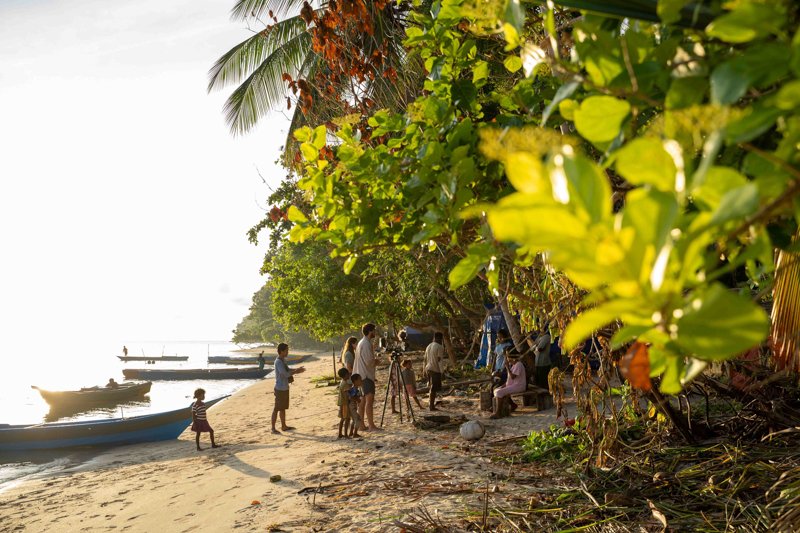
Behind the scenes filming VR natural history series ‘ecosphere: Raja Ampat’. Photo: PHORIA.
In the digital age, storytelling has evolved with the emergence of new realms of imagination and interaction. Digital technology has not only expanded the platforms and mediums through which stories are told but also drastically changed the very nature of narrative engagement. From the written word to immersive virtual realities, transmedia storytelling now offers a multifaceted canvas where stories are not just passively consumed but actively experienced, inviting audiences to step into the story, to live and breathe within the narrative, not dissimilar to how indigenous communities shared knowledge through oral storytelling through generations. In today’s dynamic landscape, storytellers have the potential to be architects of experiential worlds, leveraging technology to craft stories that resonate deeply, engage profoundly, and linger long in the memory. Along with such opportunities comes responsibility; narratives shape our beliefs and contribute to our imagined futures.
The Emergence of Virtual Reality
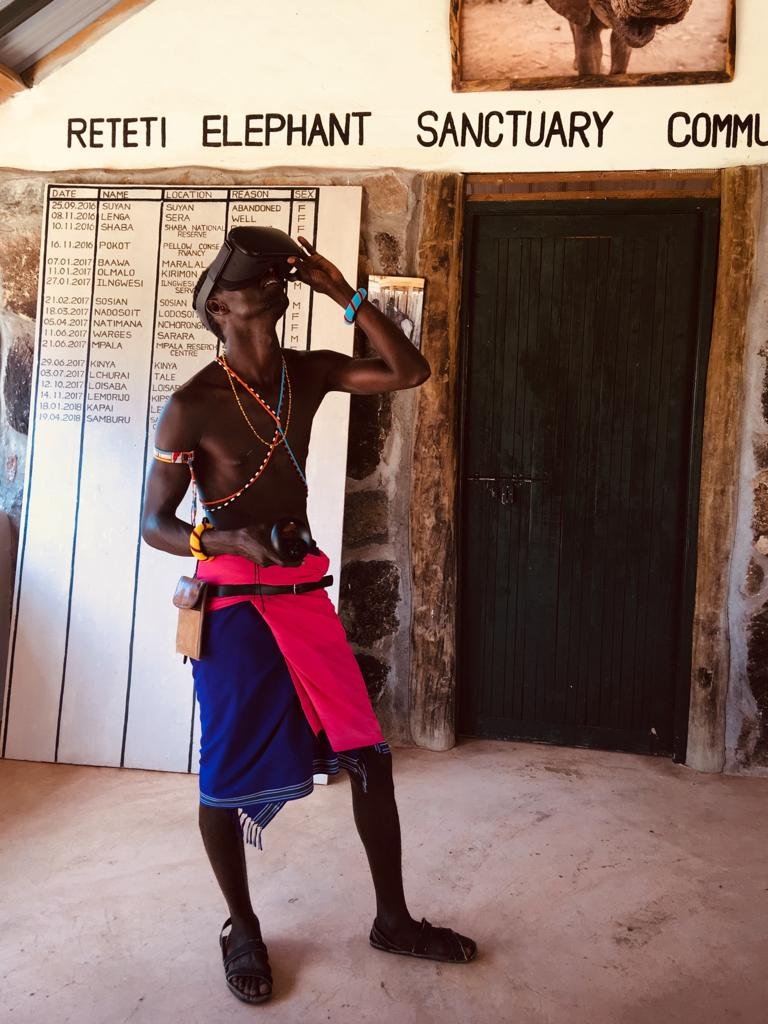
A Samburu man viewing VR rushes from previous days in the field whilst our team was filming ‘ecosphere:Kenya.’ Photo: Angie Richard.
Virtual Reality (VR) has emerged as a transformative tool for storytellers. Unlike traditional storytelling mediums, VR offers an immersive environment where the audience, or percipient, is able to have a more embodied experience. The unique offering for VR storytelling is the ability to create a sense of presence, transporting users into different worlds and perspectives. Whether it's stepping into a historical event, breathing in reciprocity with nature, or experiencing the lived experience of another person, VR makes these experiences palpable and emotionally resonant. It extends the boundaries of storytelling beyond the visual and auditory, often incorporating elements of touch and spatial awareness, thus engaging multiple senses and creating a holistic experience.
Moreover, VR's narrative creation is not limited by physical constraints, allowing storytellers to craft intricate and complex worlds that would be impossible to replicate in real life. This has significant implications for education, empathy-building, and entertainment, offering new ways to learn, understand, and feel stories. Facilitated by empathetic storytellers and technologists, VR becomes more than just a hyped gadget; it's a powerful medium that can evoke stronger emotions, foster deeper understanding, and leave a lasting impact on its audience.
From Sharks to Global Narratives
Nearly a decade ago, my friend and mentor Taylor Steele introduced me to the world of VR, first placing me in a mobile-powered headset that transported me underwater off the coast of South Australia, face-to-face with a Great White Shark. That heart-pounding moment was soon followed by another profound experience: a VR project by Steele depicting a mining worker virtually witnessing his wife's childbirth from afar. These experiences, immersive and emotionally charged, ignited my passion for impactful storytelling in virtual reality. Furthermore, working Sybil Steele and her female-founded creative studio TEMME, I began to explore the potential of elevating human stories in VR.
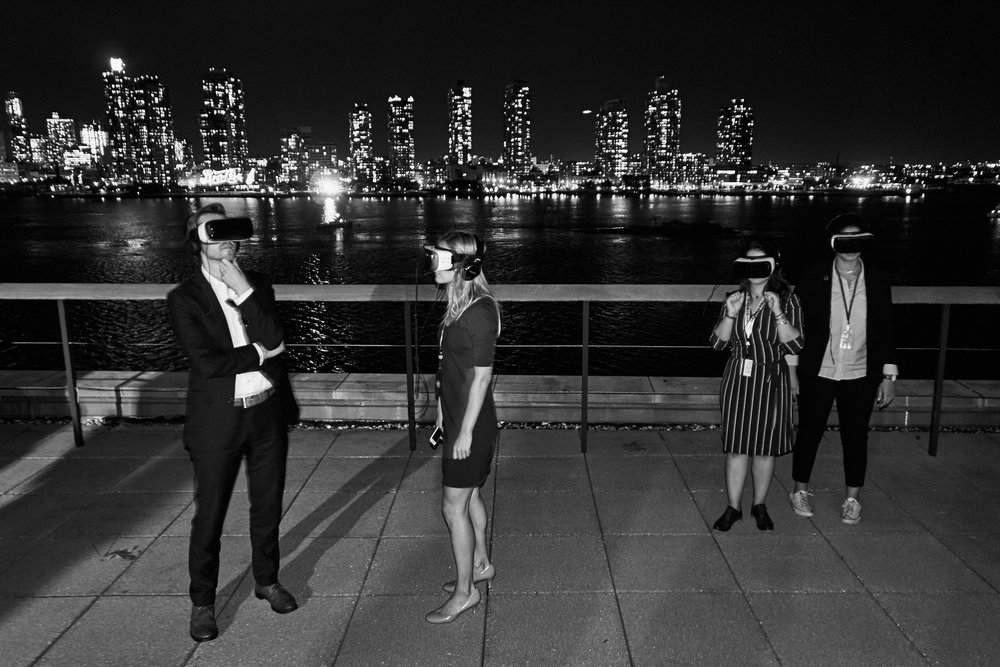
Premiering TEMME’s VR film Mothers of the Atlas at the United Nations Social Good Summit in New York, a 360° documentary exploring how wireless mobile technology contributes to women’s maternal health in Morocco’s Atlas Mountains. Photo: Paul de Luna.
My journey over two decades of storytelling, evolving from a surf/travel magazine writer and editor to a digital publisher and eco-adventure filmmaker, has always been fueled by a deep-seated curiosity and empathy for diverse human experiences. Semi-nomadic living and extensive global wandering alone and with my family has cemented my belief that we must rekindle our role as planetary custodians. We've lost touch with the cultural and ecological narratives that our ancestors passed down orally, narratives that once shaped worldviews promoting regenerative living. As Tyson Yunkaporta puts it, we’ve become trapped in 'wrong stories' leading to degenerative practices. Futurist Monika Bielskyte's work resonate with me, and her words: "Those who control the fantasy control the future." Although I'm not a technologist or camera expert – I’m storyteller and regenerative futures researcher - the power and potential of VR storytelling compelled me to enter this male-dominated field. My goal is clear: to champion and create stories that pave the way for a more equitable and sustainable future for all.

Angie on location in Raja Ampat with Director Joseph Purdam, filming ‘ecosphere.’ Photo: PHORIA.
Collaborating with skilled technologists and camera experts, I’ve had the privilege of applying my storytelling and production skills to the realm of immersive technology. This collaboration has led to impactful projects like the award-winning 'ecosphere' natural history series, climate security documentary 'Sea of Islands', and a recent VR animated film ‘What If’, which vividly portrays the potential impacts of climate change in Dubai. These projects, shared on major global stages such as the United Nations’ General Assembly and COP conferences, meld my dual passions for human and nature narratives, breaking new ground in VR documentary storytelling and introducing diverse global perspectives to a wide audience. On a personal note, this technology allowed my late grandmother to virtually join my family’s travels across Asia, experiencing our journey through 360° videos I created for her to view in a VR headset.

United Nations delegation watching climate security documentary ‘Sea of Islands’. Photo: UNDPPA.
Access to Immersive Technology
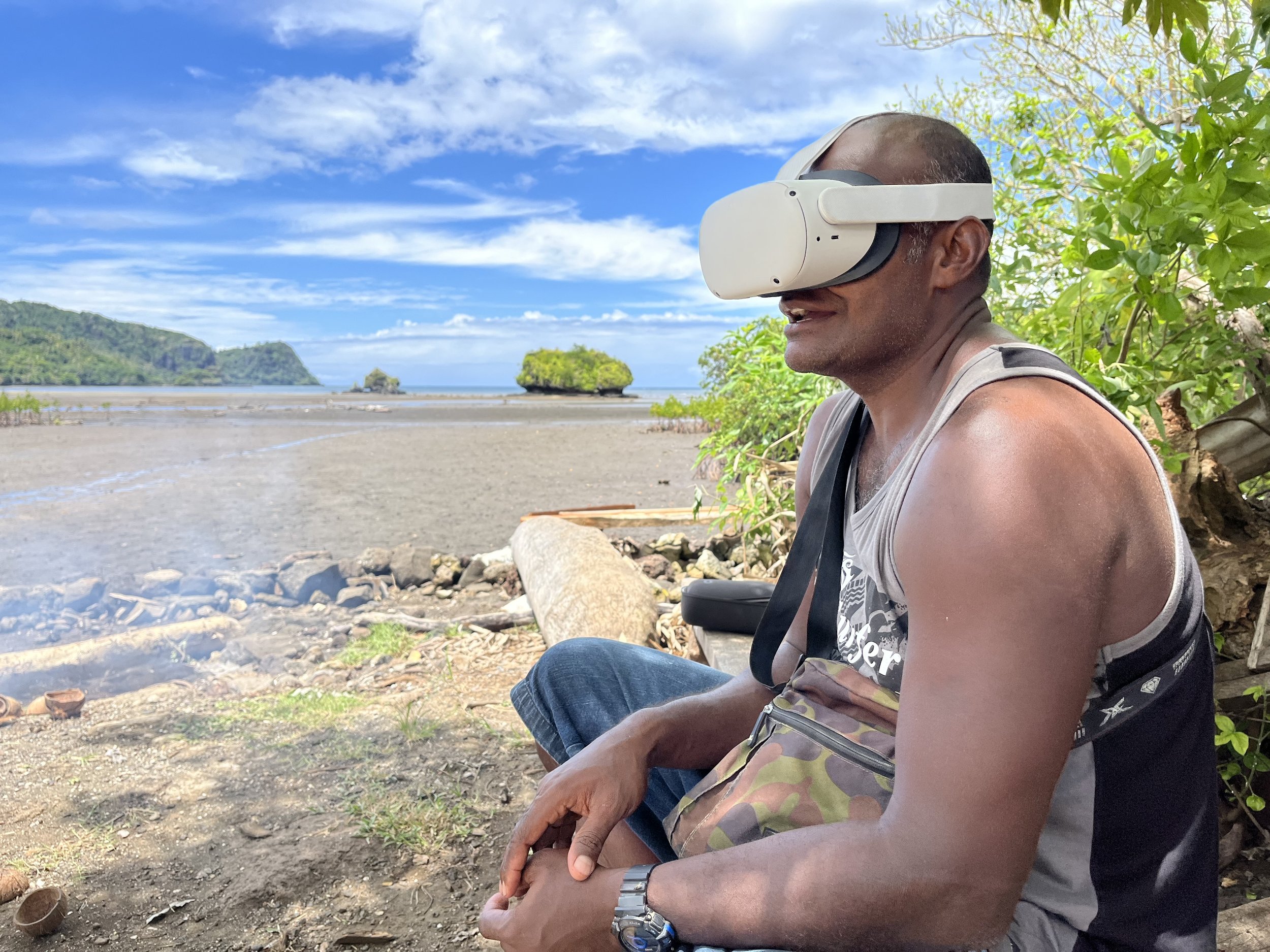
While access to VR experiences remains a challenge, the rise of community-based experiences is making VR more accessible and social, circumventing the need for personal equipment. I am a firm advocate for this broader access, fully aware of the internet bandwidth limitations in remote communities worldwide. Engaging in conversations with indigenous friends and elders, I explore how this technology might benefit their communities. A memorable instance occurred during the filming of 'Sea of Islands' in Fiji. After viewing our 'ecosphere' episode on Raja Ampat, a village headman was inspired by the coral reef replanting efforts in Misool. He saw the potential of using a shared VR headset to educate local villages and government officials, hoping to spark similar environmental projects and garner funding support in Fiji. In crafting distribution plans and contemplating legacy in this space, production companies and VR storytellers must thoughtfully consider such access. Ensuring widespread availability is vital to the impact and longevity of our work in immersive storytelling, as is the importance of co-creation with local communities (I will write an entire blog about co-creation soon).
A village headman in Fiji watching ‘ecosphere: Raja Ampat’, which inspired his community to want to try coral replanting programs as demonstrated by locals in Misool. Photo: Angie Richard.
Funding challenges also present a unique hurdle for immersive storytelling. Unlike traditional film production, VR demands specialized equipment, software, and technical expertise, often inflating production costs. The niche nature of VR content can also be a deterrent for conventional funding sources like studios and networks, which may be hesitant to invest heavily in a medium still gaining ground in mainstream media. Additionally, the return on investment for VR projects can be less predictable, given the relatively smaller audience base and the need for specific viewing equipment. This landscape requires VR filmmakers to seek alternative funding routes, such as grants focused on technological innovation, crowdfunding, and partnerships with tech companies keen on promoting VR technology. Despite these challenges, the potential of VR documentaries to offer unparalleled immersive experiences keeps driving creators to find innovative solutions to bring our visions to life.
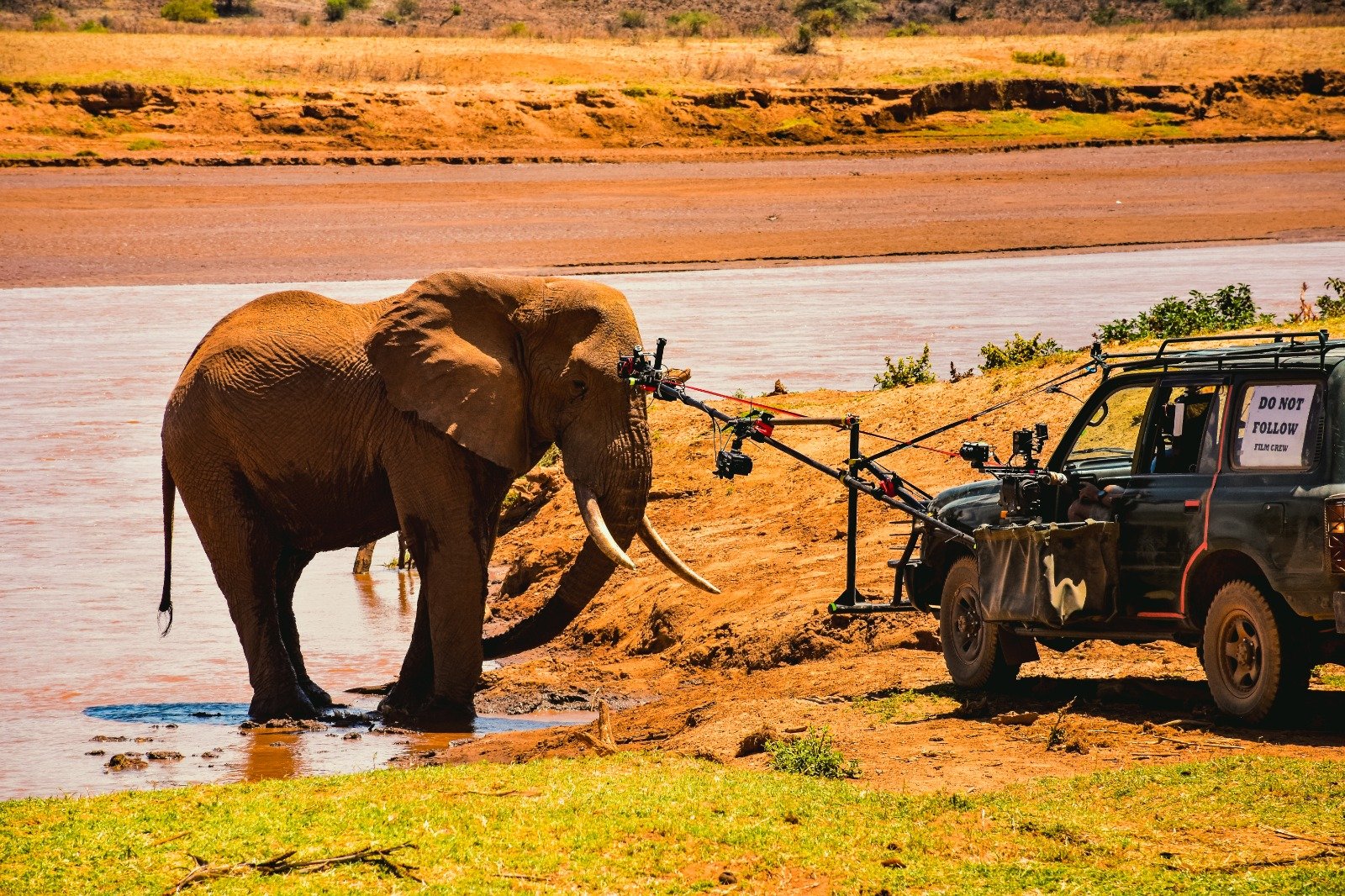
Technical set up* of our custom VR cameras whilst filming ‘ecosphere: Kenya’. Photo: Angie Richard.
*Note: though shooting in stereoscopic 180° requires our camera team to be close, the above image depicts the camera car and equipment much closer to the wild elephant than was the case in real life. Wildlife rangers and wildlife camera experts were engaged throughout this unique production.
Infusing Regenerative Principles into Immersive Storytelling
Moving into the future, I remain committed to both immersive story facilitation and advocating for greater access and co-creation. Bringing together a vast network of diverse creatives, technologists and community members, Anicca Media is poised to continue participating to stories that give rise to transformative behavioral change, enabling regenerative futures. I am leaning into VR stories and community-based shared immersive experiences that create opportunities for percipients to view the world from alternative perspectives rooted in planetary and societal wellbeing, principles of regenerative thinking.
‘ecosphere’ takes viewers on immersive journeys to Kenya, Boreno and Raja Ampat, to explore community-managed conservation. Photo: PHORIA.
In 2024, we're taking a bold step forward, blending over two decades of transmedia storytelling expertise with a progressive vision for regenerative futures. Join us as we craft innovative solutions for the immersive tech and media industries, aligning captivating storytelling with sustainable and regenerative practices to inspire lasting change. Explore our latest projects, or learn about Angie’s regenerative futures consulting.
Interested in collaborating? We’d love to hear from you, please fill out the form below and we’ll be in touch.
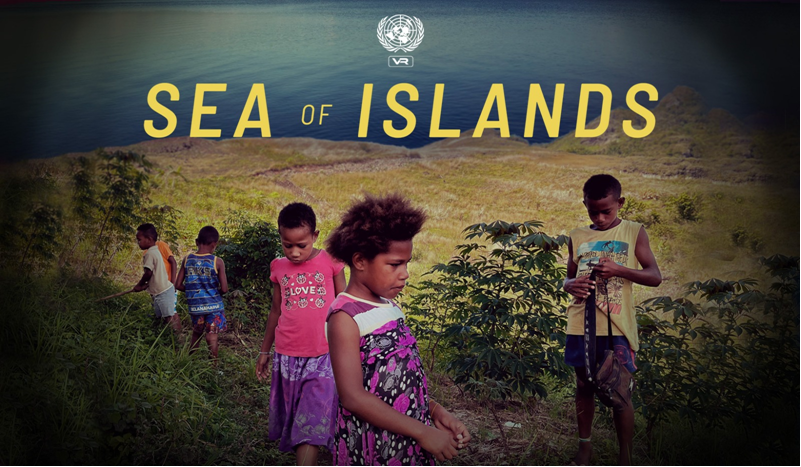
'Sea of Islands' Cinematic 360° Virtual Reality Experience on Climate Security in the South Pacific
I am truly excited about the upcoming release of Anicca’s latest collaboration, Sea of Islands, a cinematic 360° virtual reality experience that invites viewers to visit Pacific Islands already facing the impact of the climate crisis and meet local communities sharing their inspirational stories of resilience.

The VR documentary has been initially shared with United Nations members and will launch globally on June 15th.
Amb. Rabab Fatima thanked DPPA for developing Sea of Islands:
"The video shows us the breathtaking beauty of the Pacific Islands; but it also sadly shows us the grave risk that the Islands are facing and the need for urgent action."

Rabab Fatima (Permanent Representative of Bangladesh to UN, New York; PR to ISBA; Chair, Peacebuilding Commission; President, UN-Women Executive Board; Envoy to Peru, Jamaica) viewing Sea of Islands. Credit: Twitter/@UNPeacebuilding
United Nations Peacebuilding Commission is committed to explore avenues to support regional, national & local initiatives to mitigate the security implications & other impacts of Climate Change in the Pacific Islands. Credit: Twitter/@BangladeshUN1

Credit: Twitter/@JapanMissionUN

Credit: Twitter/@JapanMissionUN
Sea of Islands is produced by PHORIA and the United Nations Department of Political and Peacebuilding Affairs (UN DPPA), with Anicca Media.
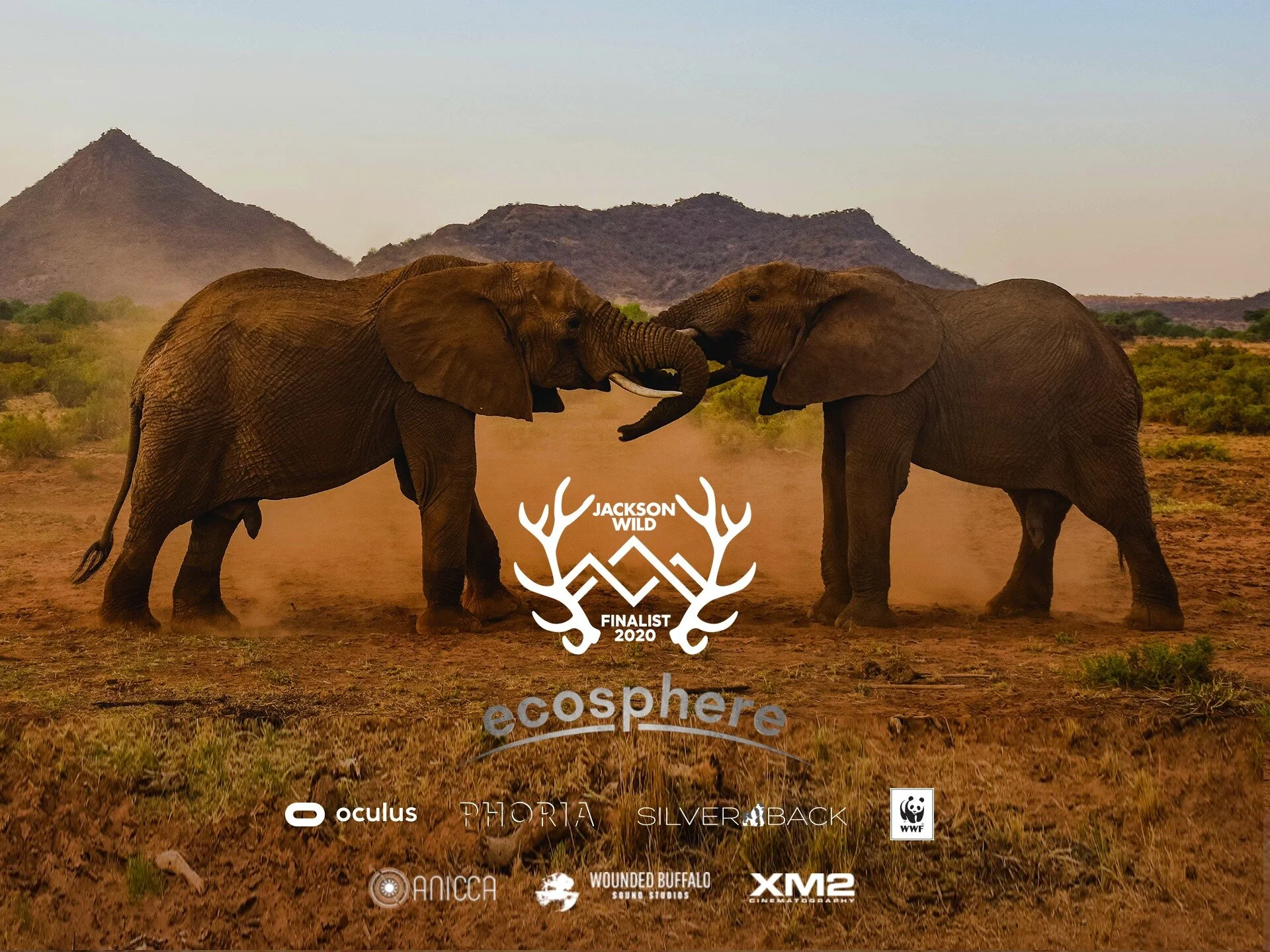
Ecosphere's 'Kenya' selected as a finalist at Jackson Wild, The Oscars of Natural History
Humbled to have our ecosphere ‘Kenya’ episode selected as a finalist for Best 360 and Virtual Reality Storytelling in Jackson Wild Festival, the Oscars of Natural History.
'Kenya' champions the restoration of East Africa's wild spaces, so that elephants can roam freely and forge a positive future for the entire ecosystem.
A very special shoutout to our conservation partners who feature in this ecosphere episode 'Kenya':
Download ecosphere: ocul.us/2Ue2n58
Jackson Wild finalists: https://bit.ly/jackson-wild


Ecosphere launches globally on Oculus Quest and GO for World Ocean's Day
ecosphere, a groundbreaking VR nature series produced in partnership by Phoria, WWF, Oculus, Silverback Films, Anicca Media and XM2, is now available to download on Oculus Quest and GO. Highlighting indigenous champions on the frontline of conservation around the world in ground-breaking cinematic VR 180, ecosphere is a landmark natural history series and Anicca Media couldn’t be more thrilled to join our partners in bringing it to the world in headset today on World Ocean’s Day.
From Venture Beat:
“Shot with pre-production 180-degree 3D cameras based on Z-Cam’s E2, Ecosphere is a technology showcase for next-generation immersive videos, pushing the state of the art for consumer VR experiences. Phoria notes that the videos feature the world’s first 5.7K stereoscopic VR footage at 60 frames per second, delivering high levels of detail and 3D depth at a nausea-reducing level of smoothness. Highly demanding scenes that would normally be destroyed by visual artifacts, such as the movements of schools of fish and shimmers in coral reefs, are rendered almost perfectly in Ecosphere — a major achievement for any app, let alone one that can be enjoyed for free.”

Director Joseph Purdam on the tools filming ecosphere’s Raja Ampat episode.
Discover More: phoria.com.au/projects/ecosphere
Download for Quest & Go:
Quest: oculus.com/experiences/quest/2926036530794417
Go: oculus.com/experiences/go/2856269307784398/
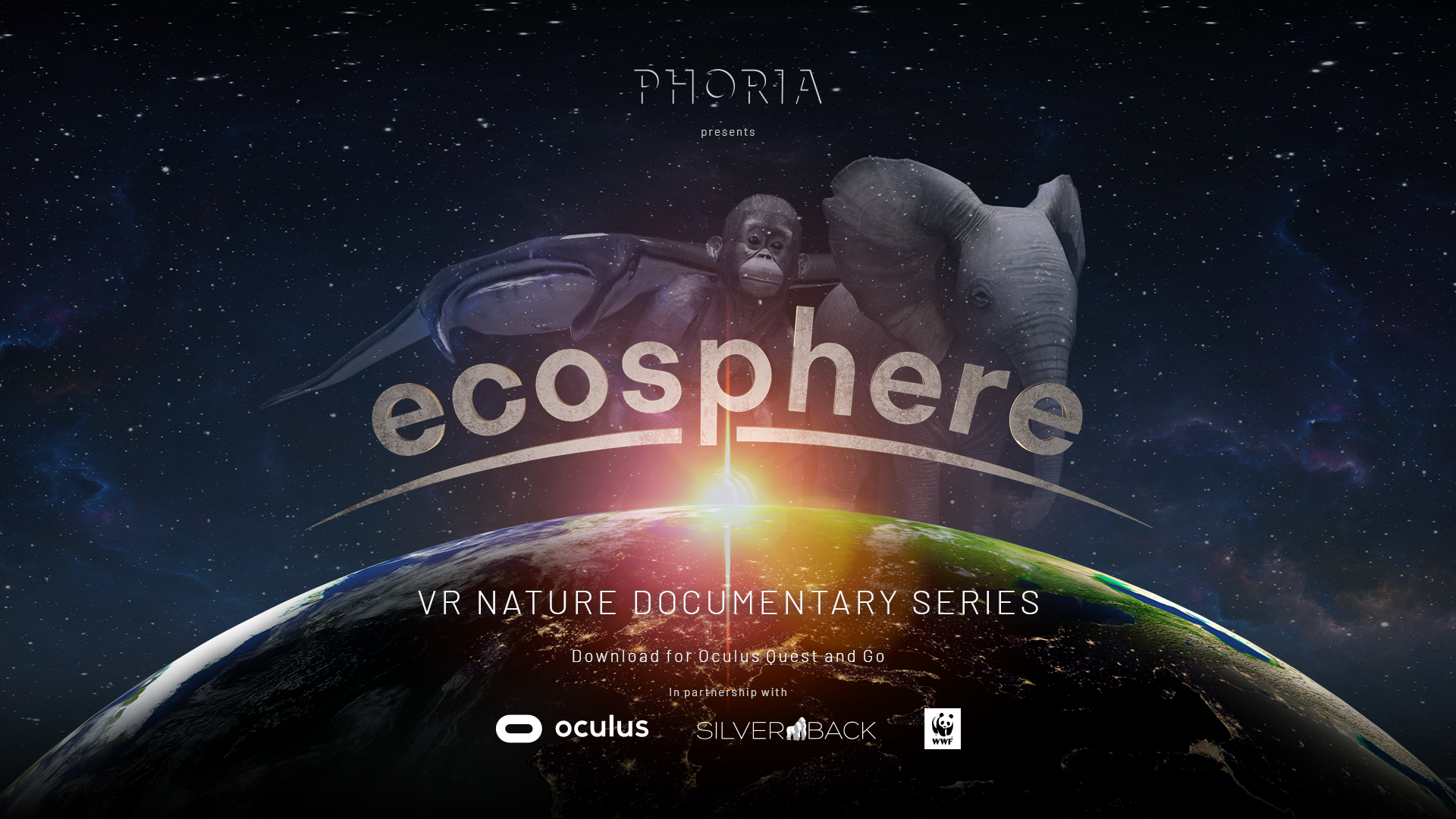
Ecosphere VR - This Is Wildlife Documentary Filmmaking Like You've Never Seen It Before
1 June, 2020: PHORIA, an award-winning technology studio, today announced the worldwide online release of ecosphere, a groundbreaking Virtual Reality nature documentary series produced in partnership with Facebook’s Oculus, the World Wide Fund for Nature (WWF) and Silverback Films. The series is narrated by Emmy Award-winning actress and WWF Ambassador, Anna Friel, and will be available to experience on Oculus Quest and Oculus Go VR headsets from June 8, 2020, via the ecosphere app.
ecosphere is an ambitious VR experience that immerses viewers in the wildest places on earth. The series features never-before-seen cinematic 5.7k stereoscopic VR footage at 60fps, shot with the latest pre-production 3D-180 cameras. Custom VR stabilising technology allowed filming to take place in incredibly technically challenging environments — from the air and deep into the ocean.
ecosphere gently guides viewers through some of nature’s most fragile and diverse ecosystems, highlighting indigenous and community-led efforts to protect our most precious wildlife. With an emotive original musical score, the series transports viewers into our extraordinary world — to the great savannahs of Kenya (Africa), the ancient jungles of Borneo (Malaysia) and the rich coral reefs of Raja Ampat (Indonesia).
Evocative storytelling takes place across ecosphere’s three episodes, as local communities come together to help nature recover from the impact of modern human life. The series focuses on uplifting and inspiring viewers, bringing home the idea that when human beings create space for nature, humanity and nature thrive together.
The ecosphere team is led by award-winning international filmmakers Joseph Purdam (PHORIA), Angie Davis (Anicca Media), Daniel Huertas (Silverback Films), Eric Cheng (Oculus) and Colin Butfield (WWF).
“ecosphere sets a new standard for natural-history storytelling on the Oculus platform,” said Eric Cheng, Head of Immersive Media for Facebook’s Oculus. “High-resolution, high-frame-rate 3D-180 stories are combined with thoughtful spatial audio production to create one of the most compelling immersive video experiences we’ve seen.”
“ecosphere takes natural history production to a new level,” said Daniel Huertas, Silverback Films. “VR gives viewers a rare chance to immerse themselves in someone else’s story, in their hope for a positive future.”
“This is wildlife documentary filmmaking like you’ve never seen it,” said Angie Davis, Anicca Media. “The synergy of our planet comes to life before your eyes as you’re right there in the midst of it. An unforgettable experience.”
“WWF couldn’t be more proud of this team,” said Colin Butfield, WWF. “The uplifting messages of ecosphere are important to hear now, as people come together during these challenging times. ecosphere is truly an experience to inform, empower and most of all, inspire action to protect our precious planet.”
“ecosphere will open the hearts of viewers to the beauty of the natural world,” said Joseph Purdam, PHORIA. “These diverse stories and voices are on the frontline of community-led environmental activism. It’s a privilege that ecosphere can help raise awareness for rewilding efforts and reveal just how nature and humanity can co-exist together, in harmony.”
Coming June 8th: https://www.phoria.com.au/projects/ecosphere/
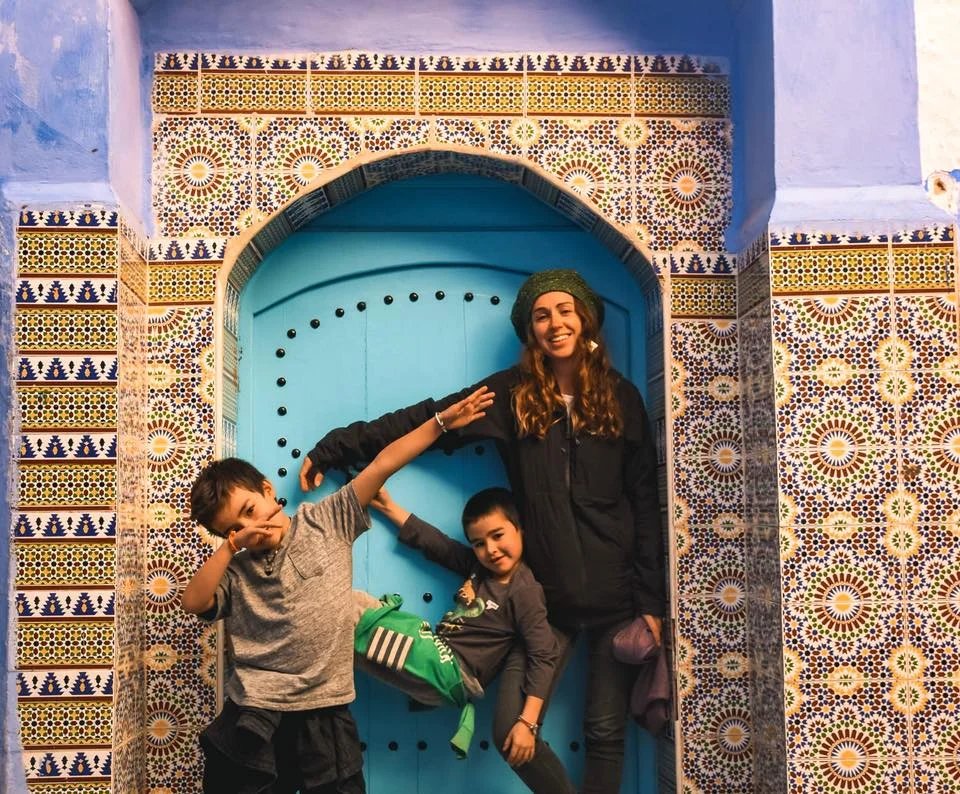
Angie featured on the World Nomads podcast
Angie sat down with World Nomads podcast to discuss life as a digital nomad, making films for social impact, and virtual reality.
I had an absolute joy sitting down with with Kim Napier on the World Nomads podcast, where I opened up about life as a full time digital nomad with kids, making films to help change the world, and my thoughts on the future of virtual reality as a powerful storytelling medium.

Dustin Hollick and Rhian Slapp of The Laps TV also pop in for a cameo, to share a few stories from our film The Laps Tasmania.
You can listen to the podcast below, or on
or
The World Nomads Podcast has been named an Honoree in the Annual Webby Awards!
Presented by the International Academy of Digital Arts and Sciences (IADAS), The Webbys recognise excellence in seven major media types: Websites, Video, Advertising, Media & PR, Social, Apps, Mobile & Voice, Games and Podcasts. Basically, it’s the Oscars of the Internet.
With more than 13,000 pieces of work entered in the awards, our podcast ranked in the top 18%!
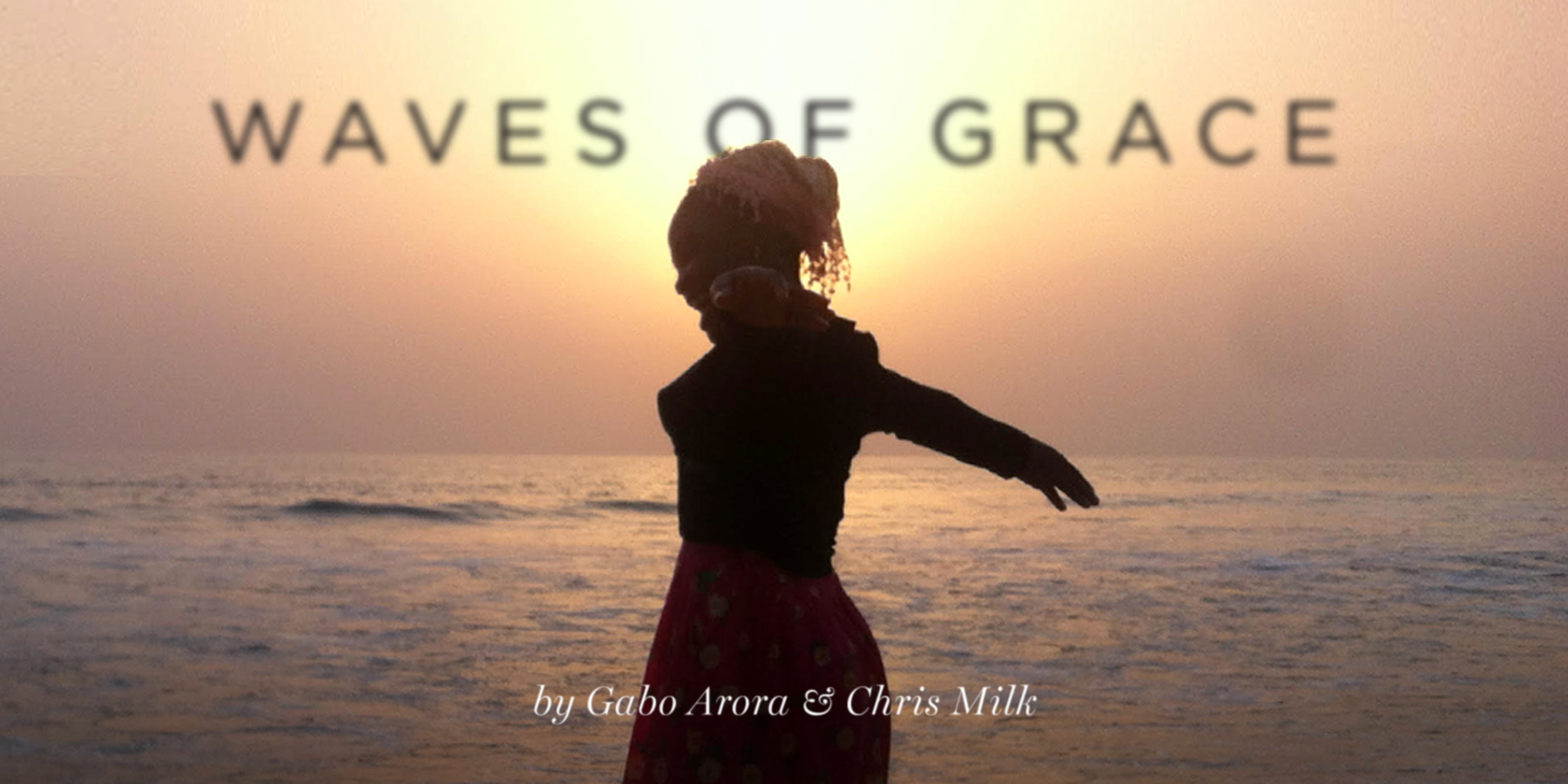
Waves of Grace - experience the impact of Liberia's Ebola crisis in VR
Waves of Grace is a powerful VR experience following the journey of an Ebola survivor in Liberia.

Virtual Reality is quite possibly the most powerful educational tool we have. In this 360 experience by Gabo Arora and Chris Milk for Within, I spent 10 minutes of my Sunday afternoon walking alongside Eboloa survivor Decontee Davis in Liberia, where 11,207 people have died (including neighbouring Guinea and Sierra Leone) since the outbreak began in December 2013.* To put this number in to perspective, in the September 11 attacks on the World Trade Center in New York, USA, in 2001, 2,996 people were killed (including the 19 hijackers).


When we are so removed from health crises such as those that plague Africa, it is difficult to comprehend the reality. Virtual Reality is able to break down the barriers of distance and teleport users directly into the shoes of others, raising empathy and ultimately cultivating compassion thus becoming a powerful tool in education.
For a full immersive experience, watch Waves of Grace in a VR headset on the Within VR app.
*Source: Reuters